| Authors | |
|---|---|
| Publisher | |
| Series | |
| Language | |
| Translator | DHARMA REALM BUDDHIST UNIVERSITY INTERNATIONAL INSTITUTE FOR THE TRANSLATION OF BUDDHIST TEXTS |
| Publication Year | 1981 |
| Pages | 180 |
| Table of Contents | G2 AIDING PRACTICES OF THE BODHIMANDA. H1 At first request he speaks in general. H2 On second request he speaks in detail. I1 Ananda asks. I2 The Thus Come One answers. J1 He promises to speak; they wish to listen. J2 He brings up the three studies in general. J3 He specifically lists the three studies. K1 He lists the importance of the precepts first. L1 He teaches him to hold precepts. M1 He gathers in first and then gives evidence. N1 ONE MUST CUT OFF LUST. O1 Distinguishes the characteristic harm and benefit. P1 First he explains the benefit or harm of holding or violating. Q1 Holding it, then one certainly can get out of birth and death. Q2 Violating it, one certainly will fall into demonic paths. P2 He discusses the behavior of demons within Buddhism. Q1 Greed for lust turns the world. Q2 Teaching people to cut off lust is the Buddha’s instruction. P3 Decides if the Bodhimanda can be accomplished. Q1 An analogy shows that if one doesn’t cut off lust, Bodhi can’t be obtained. Q2 Diligently and profoundly cutting off lust can bring accomplishment. O2 He speaks of the divisions of deviant and proper. N2 ONE MUST CUT OFF KILLING. O1 He distinguishes the characteristic harm and benefit. P1 First he explains the benefit or harm of holding or violating. Q1 Holding it, then one certainly can get out of birth and death. Q2 Violating it, one certainly will fall into the path of spirits. P2 He discusses the behavior of demons within Buddhism. Q1 Eating flesh turns the world into a teaching by ghosts. Q2 Teaching people to cut off killing is the Buddha’s instruction. P3 He decides if liberation can be obtained. Q1 An analogy makes clear if one doesn’t cut off killing it is difficult to get free. Q2 If one diligently and profoundly cuts off killing, one can get free. O2 He speaks of the division into deviant and proper. N3 ONE MUST CUT OFF STEALING. O1 He distinguishes the characteristic harm and benefit. P1 First he discusses the benefit or harm of holding or violating. Q1 Holding it, one then certainly can get out of birth and death. Q2 Violating it, one certainly will fall into deviant paths. P2 He discusses the behavior of weird beings within Buddhism. Q1 Hidden influences are the teachings of weird beings. Q2 Teaching people to cut off stealing is the Buddha’s instruction. R1 First he offers his own instructions. R2 Then he explains it is the teaching of all former Buddhas. P3 He decides if samadhi can be obtained. Q1 An analogy makes clear that if stealing is not cut off samadhi is hard to obtain. Q2 Diligent and profound cutting off of stealing can bring samadhi. N4 ONE MUST CUT OFF FALSE SPEECH O1 He discusses the intent of precepts or provisional dharmas. P1 False speech is very harmful. Q1 Traces false speech as a reason for becoming demonic. Q2 Points out the motives of false speech. Q3 Predicts the fall of those who harm the good. P2 He shows that he has clearly instructed against false speech. Q1 The Buddha instructs that holy transformations must be secret. Q2 Only at the end of their life is there a transmission. P3 The clear instruction transmitted by former Buddhas. P4 Deciding if Bodhi can be obtained. Q1 An analogy shows that if one does not cut off false speech, it is difficult to obtain Bodhi. Q2 He promises if one can cut off false speech, one will certainly accomplish Bodhi. O2 He speaks of the division into deviant and proper. M3 General conclusion: stay distant from demons. L2 AIDED BY THE POWER OF THE MANTRA M1 Supreme praise for diligently upholding it. M2 He also shows it is not difficult to get rid of these habits. K2 A GENERAL EXPLANATION OF SAMADHI AND WISDOM IN THE BODHIMANDA. L1 Because of precepts one produces samadhi. L2 Because of samadhi one opens wisdom. G2 At second request he explains in detail. H1 At second request he describes the Bodhimanda. I1 Ananda asks again. I2 The World Honored One answers again. J1 ESTABLISHING THE BODHIMANDA. K1 The Platform. K2 The Adornments. K3 The Offerings. K4 The Images. J2 Stages of cultivation and accomplishment. K1 First three weeks: initial accomplishment of samadhi and wisdom. K2 After one hundred more days: sudden certification to the sagely fruit. K3 Concludes answer to question. H2 On second request he speaks the spiritual Mantra. I1 The entire assembly asks again. I2 The Thus Come One answers again. J1 He speaks the spiritual Mantra. K1 An appearance of light. K2 The great assembly respectfully listens. K3 THE FIVE SECTIONS OF THE SPIRITUAL MANTRA. J2 HE SPEAKS OF THE BENEFITS OF THE MANTRA. K1 The important tool of all Buddhas. L1 He explains the entire name. L2 He states its function. L3 Further explanations are endless. K2 A beneficial reliance for living beings. L1 Specific explanation of the supreme name. L2 A thorough discussion of its awesome power. M1 He first explains that by diligently holding it, cultivators can rely on it. N1 He explains that recitation of it will keep demons away. N2 Writing it out and carrying it is of benefit. M2 A detailed account of the ways in which it protects life and aids people on the Path. N1 General mention of these two aspects. N2 Detailed listing of its many merits. O1 Apparent benefit to each living being. P1 Rescues from calamities. Q1 Evil situations cannot bring harm. Q2 Evil beings cannot break through its added protection to cause harm. P2 Aids in accomplishing Way-karma. Q1 The value of its recitation. Q2 Separation from various destinies. Q3 Always born where there are Buddhas. Q4 Various practices are accomplished. Q5 All offenses are eradicated. Q6 Quick certification to non-production. P3 Answers all kinds of wishes. O2 Apparent universal benefit to the land. P1 All difficulties disappear. P2 The people experience plenty and happiness. P3 Evil omens do not manifest. M3 He makes clear with a general exhortation that cultivators will certainly certify. N1 They will be protected and peaceful. N2 They will be far apart from demons and enemies. N3 They will not commit four violations. N4 They must keep their minds on their recitation. I3 THE ASSEMBLY VOWS TO PROTECT IT. J1 The outer assembly protects and holds it. K1 The multitudes of Vajra Power-Knights. K2 The venerable hosts of gods. K3 The host of the eight divisions. K4 The ruling assembly of illumining bodies. K5 The deities and spirits of the earth. J2 The inner sages protect and hold it. K1 They reveal their origin and their long-term protection. K2 They assert their protection and maintaining. F4 HE EXPLAINS CERTIFICATION TO THE POSITION OF DHYANA CAUSING HIM TO DWELL IN THE COMPLETE SAMADHI AND TEND STRAIGHT TOWARD BODHI. G1 Ananda is grateful for the instruction and asks about the position. G2 The Thus Come One answers with instruction in the arisal of conditions. H1 The Thus Come One offers to speak and the great assembly waits to hear. H2 The True Suchness which is relied upon is the source of the Dharma. H3 Defiled conditions arise and become the turning wheel. I1 He exhorts Ananda to recognize two causes for being upside down. I2 He clarifies the two causes for being upside down in detail. J1 He makes it clear that living beings are upside down. K1 From the true they give rise to the false. K2 They confuse their origin so it is difficult to return. K3 They produce karma which brings a retribution. J2 He makes clear the world is upside down. K1 He explains the meaning of the word world. K2 He shows its characteristic is constant flux. K3 He explains the retributions of the categories of beings. L1 He lists the names of the categories of beings. L2 HE EXPLAINS THE RETRIBUTIONS OF THE CATEGORIES OF BEINGS. M1 A specific listing of the categories of beings. N1 EGG-BORN. N2 WOMB-BORN. N3 MOISTURE-BORN. N4 TRANSFORMATION-BORN. N5 HAVING FORM. N6 WITHOUT FORM. N7 HAVING THOUGHT. N8 WITHOUT THOUGHT. N9 NOT TOTALLY HAVING FORM. N10 NOT TOTALLY WITHOUT FORM. N11 NOT TOTALLY WITH THOUGHT. N12 NOT TOTALLY WITHOUT THOUGHT. M2 Reiterates their name and number. |
狀態:可借
📖 此為圖書館藏書,請至櫃台辦理借閱。
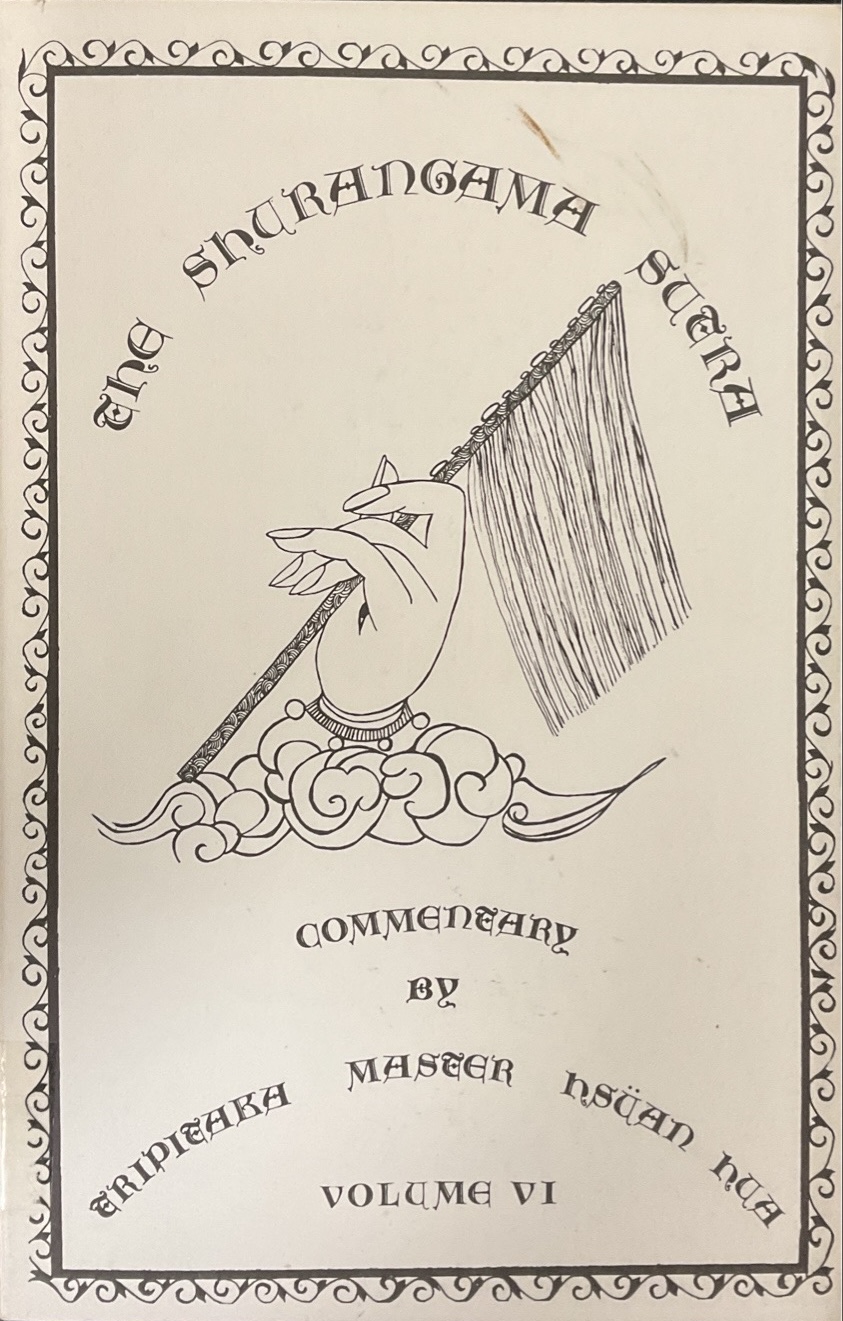
THE SHURANGAMA SUTRA
book ID :7210202701000602
Series:VOLUME VI
G2 AIDING PRACTICES OF THE BODHIMANDA.
H1 At first request he speaks in general.
H2 On second request he speaks in detail.
I1 Ananda asks.
I2 The Thus Come One answers.
J1 He promises to speak; they wish to listen.
J2 He brings up the three studies in general.
J3 He specifically lists the three studies.
K1 He lists the importance of the precepts first.
L1 He teaches him to hold precepts.
M1 He gathers in first and then gives evidence.
N1 ONE MUST CUT OFF LUST.
O1 Distinguishes the characteristic harm and benefit.
P1 First he explains the benefit or harm of holding or violating.
Q1 Holding it, then one certainly can get out of birth and death.
Q2 Violating it, one certainly will fall into demonic paths.
P2 He discusses the behavior of demons within Buddhism.
Q1 Greed for lust turns the world.
Q2 Teaching people to cut off lust is the Buddha’s instruction.
P3 Decides if the Bodhimanda can be accomplished.
Q1 An analogy shows that if one doesn’t cut off lust, Bodhi can’t be obtained.
Q2 Diligently and profoundly cutting off lust can bring accomplishment.
O2 He speaks of the divisions of deviant and proper.
N2 ONE MUST CUT OFF KILLING.
O1 He distinguishes the characteristic harm and benefit.
P1 First he explains the benefit or harm of holding or violating.
Q1 Holding it, then one certainly can get out of birth and death.
Q2 Violating it, one certainly will fall into the path of spirits.
P2 He discusses the behavior of demons within Buddhism.
Q1 Eating flesh turns the world into a teaching by ghosts.
Q2 Teaching people to cut off killing is the Buddha’s instruction.
P3 He decides if liberation can be obtained.
Q1 An analogy makes clear if one doesn’t cut off killing it is difficult to get free.
Q2 If one diligently and profoundly cuts off killing, one can get free.
O2 He speaks of the division into deviant and proper.
N3 ONE MUST CUT OFF STEALING.
O1 He distinguishes the characteristic harm and benefit.
P1 First he discusses the benefit or harm of holding or violating.
Q1 Holding it, one then certainly can get out of birth and death.
Q2 Violating it, one certainly will fall into deviant paths.
P2 He discusses the behavior of weird beings within Buddhism.
Q1 Hidden influences are the teachings of weird beings.
Q2 Teaching people to cut off stealing is the Buddha’s instruction.
R1 First he offers his own instructions.
R2 Then he explains it is the teaching of all former Buddhas.
P3 He decides if samadhi can be obtained.
Q1 An analogy makes clear that if stealing is not cut off samadhi is hard to obtain.
Q2 Diligent and profound cutting off of stealing can bring samadhi.
N4 ONE MUST CUT OFF FALSE SPEECH
O1 He discusses the intent of precepts or provisional dharmas.
P1 False speech is very harmful.
Q1 Traces false speech as a reason for becoming demonic.
Q2 Points out the motives of false speech.
Q3 Predicts the fall of those who harm the good.
P2 He shows that he has clearly instructed against false speech.
Q1 The Buddha instructs that holy transformations must be secret.
Q2 Only at the end of their life is there a transmission.
P3 The clear instruction transmitted by former Buddhas.
P4 Deciding if Bodhi can be obtained.
Q1 An analogy shows that if one does not cut off false speech, it is difficult to obtain Bodhi.
Q2 He promises if one can cut off false speech, one will certainly accomplish Bodhi.
O2 He speaks of the division into deviant and proper.
M3 General conclusion: stay distant from demons.
L2 AIDED BY THE POWER OF THE MANTRA
M1 Supreme praise for diligently upholding it.
M2 He also shows it is not difficult to get rid of these habits.
K2 A GENERAL EXPLANATION OF SAMADHI AND WISDOM IN THE BODHIMANDA.
L1 Because of precepts one produces samadhi.
L2 Because of samadhi one opens wisdom.
G2 At second request he explains in detail.
H1 At second request he describes the Bodhimanda.
I1 Ananda asks again.
I2 The World Honored One answers again.
J1 ESTABLISHING THE BODHIMANDA.
K1 The Platform.
K2 The Adornments.
K3 The Offerings.
K4 The Images.
J2 Stages of cultivation and accomplishment.
K1 First three weeks: initial accomplishment of samadhi and wisdom.
K2 After one hundred more days: sudden certification to the sagely fruit.
K3 Concludes answer to question.
H2 On second request he speaks the spiritual Mantra.
I1 The entire assembly asks again.
I2 The Thus Come One answers again.
J1 He speaks the spiritual Mantra.
K1 An appearance of light.
K2 The great assembly respectfully listens.
K3 THE FIVE SECTIONS OF THE SPIRITUAL MANTRA.
J2 HE SPEAKS OF THE BENEFITS OF THE MANTRA.
K1 The important tool of all Buddhas.
L1 He explains the entire name.
L2 He states its function.
L3 Further explanations are endless.
K2 A beneficial reliance for living beings.
L1 Specific explanation of the supreme name.
L2 A thorough discussion of its awesome power.
M1 He first explains that by diligently holding it, cultivators can rely on it.
N1 He explains that recitation of it will keep demons away.
N2 Writing it out and carrying it is of benefit.
M2 A detailed account of the ways in which it protects life and aids people on the Path.
N1 General mention of these two aspects.
N2 Detailed listing of its many merits.
O1 Apparent benefit to each living being.
P1 Rescues from calamities.
Q1 Evil situations cannot bring harm.
Q2 Evil beings cannot break through its added protection to cause harm.
P2 Aids in accomplishing Way-karma.
Q1 The value of its recitation.
Q2 Separation from various destinies.
Q3 Always born where there are Buddhas.
Q4 Various practices are accomplished.
Q5 All offenses are eradicated.
Q6 Quick certification to non-production.
P3 Answers all kinds of wishes.
O2 Apparent universal benefit to the land.
P1 All difficulties disappear.
P2 The people experience plenty and happiness.
P3 Evil omens do not manifest.
M3 He makes clear with a general exhortation that cultivators will certainly certify.
N1 They will be protected and peaceful.
N2 They will be far apart from demons and enemies.
N3 They will not commit four violations.
N4 They must keep their minds on their recitation.
I3 THE ASSEMBLY VOWS TO PROTECT IT.
J1 The outer assembly protects and holds it.
K1 The multitudes of Vajra Power-Knights.
K2 The venerable hosts of gods.
K3 The host of the eight divisions.
K4 The ruling assembly of illumining bodies.
K5 The deities and spirits of the earth.
J2 The inner sages protect and hold it.
K1 They reveal their origin and their long-term protection.
K2 They assert their protection and maintaining.
F4 HE EXPLAINS CERTIFICATION TO THE POSITION OF DHYANA CAUSING HIM TO DWELL IN THE COMPLETE SAMADHI AND TEND STRAIGHT TOWARD BODHI.
G1 Ananda is grateful for the instruction and asks about the position.
G2 The Thus Come One answers with instruction in the arisal of conditions.
H1 The Thus Come One offers to speak and the great assembly waits to hear.
H2 The True Suchness which is relied upon is the source of the Dharma.
H3 Defiled conditions arise and become the turning wheel.
I1 He exhorts Ananda to recognize two causes for being upside down.
I2 He clarifies the two causes for being upside down in detail.
J1 He makes it clear that living beings are upside down.
K1 From the true they give rise to the false.
K2 They confuse their origin so it is difficult to return.
K3 They produce karma which brings a retribution.
J2 He makes clear the world is upside down.
K1 He explains the meaning of the word world.
K2 He shows its characteristic is constant flux.
K3 He explains the retributions of the categories of beings.
L1 He lists the names of the categories of beings.
L2 HE EXPLAINS THE RETRIBUTIONS OF THE CATEGORIES OF BEINGS.
M1 A specific listing of the categories of beings.
N1 EGG-BORN.
N2 WOMB-BORN.
N3 MOISTURE-BORN.
N4 TRANSFORMATION-BORN.
N5 HAVING FORM.
N6 WITHOUT FORM.
N7 HAVING THOUGHT.
N8 WITHOUT THOUGHT.
N9 NOT TOTALLY HAVING FORM.
N10 NOT TOTALLY WITHOUT FORM.
N11 NOT TOTALLY WITH THOUGHT.
N12 NOT TOTALLY WITHOUT THOUGHT.
M2 Reiterates their name and number.